Track the Aurora: Real-Time Northern Lights Visibility & Predictions
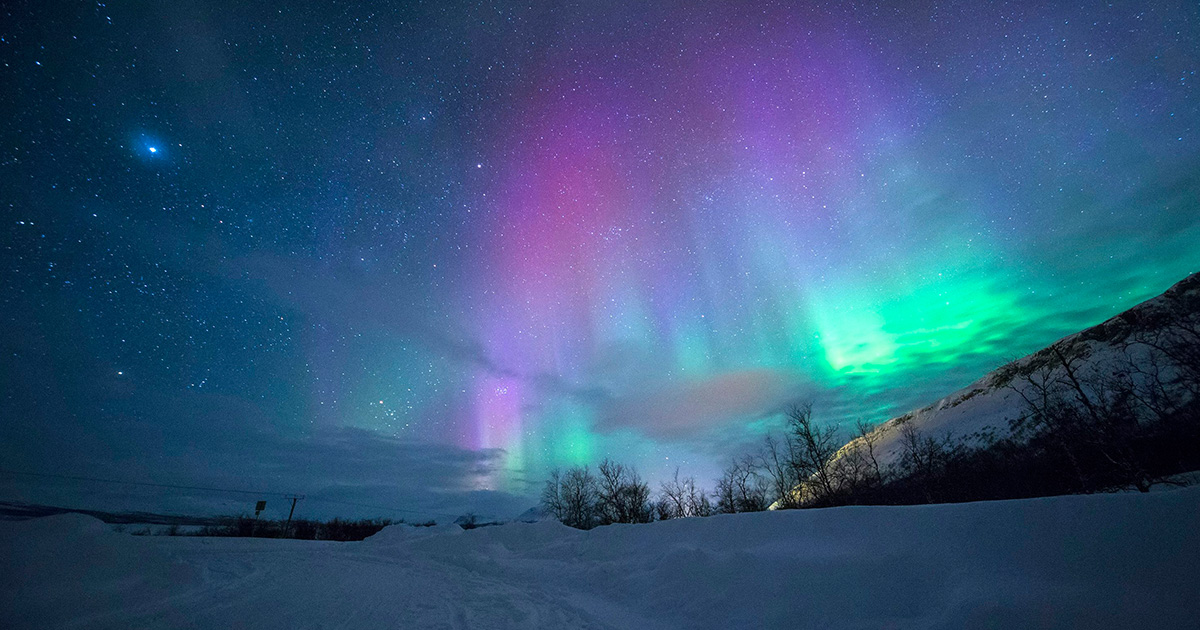
The night sky, a canvas of infinite mystery, occasionally unveils one of Earth's most breathtaking natural wonders: the aurora. Often referred to as the Northern Lights (Aurora Borealis) in the northern hemisphere and the Southern Lights (Aurora Australis) below the equator, this celestial spectacle paints the heavens with swirling curtains of green, red, and purple light. For centuries, these vibrant displays have captivated humanity, inspiring myths, legends, and an enduring sense of awe. In today's interconnected world, the dream of witnessing the aurora firsthand is more achievable than ever, thanks to advancements in space weather science and real-time tracking tools. This comprehensive guide will delve into what the aurora is, how it's predicted, and offer essential tips for maximizing your chances of experiencing this unforgettable phenomenon.
Unveiling the Celestial Spectacle: What is the Aurora?
At its heart, the aurora is a cosmic light show powered by our sun. While appearing ethereal and otherworldly, its origins are rooted in fundamental physics. The sun constantly ejects a stream of charged particles, known as solar wind, into space. Occasionally, more powerful eruptions like solar flares or coronal mass ejections (CMEs) send vast amounts of these energetic particles hurtling towards Earth.
When these charged particles encounter Earth's magnetic field, they are largely deflected. However, near the magnetic poles, the field lines converge, acting like a funnel that channels some of these particles down into the upper atmosphere. As these electrons and protons collide with atoms and molecules of atmospheric gases – primarily oxygen and nitrogen – they excite them. When these excited atoms return to their original, lower-energy state, they release photons of light. The specific color of the light depends on the type of gas and the altitude at which the collision occurs:
- Green: The most common and iconic color, produced by oxygen atoms at altitudes of around 100-200 kilometers.
- Red: Less frequent but equally stunning, also from oxygen, but at higher altitudes (above 200 km) and during more intense solar activity.
- Blue/Purple: Created by nitrogen molecules, typically at lower altitudes.
The result is a dynamic, shifting display that can range from faint glows on the horizon to mesmerizing, rapidly dancing pillars and "curtains" of light that seem to blow gently in an invisible cosmic wind. Witnessing these vibrant colors against the backdrop of a dark, starry sky is an experience that truly transcends the ordinary, reminding us of the immense power and beauty of our solar system.
The Science of Aurora Prediction: Harnessing Space Weather Data
Chasing the aurora used to be a matter of pure luck, but modern science has transformed it into a more predictable pursuit. The key lies in understanding "space weather" – the conditions in space that can affect Earth. Agencies like the National Oceanic and Atmospheric Administration (NOAA) play a critical role, providing crucial data and forecasts that empower aurora enthusiasts to plan their expeditions.
NOAA's experimental Aurora Dashboard, for instance, offers a powerful glimpse into the aurora's current and predicted activity. It provides a prediction of the aurora's visibility tonight and tomorrow night, alongside animations showing what the aurora has been up to over the last 24 hours and estimates for the next 30 minutes. This level of detail is invaluable for both seasoned aurora chasers and first-time hopefuls.
Several key metrics and factors contribute to these predictions:
- The Kp-index: This is a global geomagnetic activity index, ranging from 0 to 9. A higher Kp-index indicates more intense geomagnetic activity, meaning a stronger aurora that can be seen further away from the poles. For instance, a Kp of 4-5 might bring the aurora to parts of the northern US, while a Kp of 7-9 can make it visible across much of the contiguous United States and even parts of Europe.
- Solar Wind Speed: Faster solar wind carries more energy, which can lead to brighter and more active auroras.
- Bz Component: This refers to the north-south orientation of the interplanetary magnetic field (IMF). If the Bz is negative (southward), it aligns with Earth's magnetic field, allowing more solar wind particles to enter our atmosphere and enhance aurora activity.
By monitoring these variables, space weather scientists can provide forecasts that estimate the likelihood, intensity, and geographical reach of an aurora display. This data is synthesized into user-friendly dashboards and applications, making complex scientific information accessible to anyone hoping to catch a glimpse of the lights. Understanding these predictions is your first step towards a successful aurora hunt. For more detailed insights into specific forecasts, check out our guide on
Aurora Forecast: When and Where to See the Northern Lights Tonight.
Essential Tips for Aurora Chasers: Maximizing Your Viewing Opportunity
Seeing the aurora is often a bucket-list item, and while predictions significantly boost your chances, a successful sighting also requires strategic planning and a bit of luck. Here are practical tips to maximize your viewing opportunity:
- Choose Your Destination Wisely: The closer you are to the magnetic poles, the better your chances. Popular aurora hotspots include regions within or near the Arctic Circle (Alaska, Canada, Iceland, Norway, Sweden, Finland) and for the Aurora Australis, places like Tasmania, New Zealand, and Patagonia.
- Select the Right Time of Year: The aurora needs darkness to be visible. This means winter months in high-latitude regions are ideal, offering long nights. Avoid summer when the "midnight sun" can obscure the lights. Aim for seasons with consistently clear nights, typically late autumn to early spring.
- Escape Light Pollution: City lights create a glow that can easily wash out the aurora. Drive or trek to areas far from urban centers, where the sky is truly dark. The darker the sky, the fainter the aurora you can still perceive.
- Monitor Weather Conditions: Even with a strong aurora forecast, heavy cloud cover will hide the show. Always check local weather forecasts for clear skies. A clear, crisp, cold night is often perfect.
- Practice Patience: The aurora is a natural phenomenon; it's not on a schedule. You might need to wait hours, or even multiple nights. Be prepared to be outside for extended periods. Sometimes, a faint glow can quickly erupt into a dazzling display.
- Dress Warmly: Aurora hunting often means standing in freezing temperatures for long stretches. Layer your clothing, including thermal base layers, insulating mid-layers, and a waterproof/windproof outer shell. Don't forget insulated boots, gloves, and a hat.
- Dark Adaptation is Key: Allow your eyes to adjust to the darkness for at least 15-20 minutes. Avoid looking at bright screens or lights. Use a headlamp with a red light setting if you need illumination.
- Consider Photography Gear: While you can enjoy the aurora with your naked eye, cameras are often better at capturing its vibrant colors, especially fainter displays. A sturdy tripod, a wide-angle lens, and a camera capable of long exposures (DSLR or mirrorless) are essential for stunning aurora photography. Many modern smartphones also have excellent night modes that can capture decent shots.
By combining informed space weather tracking with these practical preparations, you significantly increase your odds of experiencing the magical dance of the Northern or Southern Lights.
Decoding Aurora Forecasts and Real-Time Trackers
To truly track the aurora, it's essential to understand how to interpret the various tools and data available. Beyond simply knowing the Kp-index, knowing *how* to use dashboards and apps is crucial.
Many websites and mobile applications offer aurora forecasts and real-time data. These often display:
- Kp-index forecasts: Usually presented as a graph over 24-48 hours, showing predicted geomagnetic activity. A Kp of 3 is often visible at magnetic latitudes around 65°, Kp 5 at 60°, and Kp 7 at 55°.
- Auroral Oval Maps: These dynamic maps illustrate the current and predicted size and position of the auroral oval – the region around the magnetic poles where the aurora is most likely to be seen. As the Kp-index rises, the oval expands further away from the poles.
- Solar Wind Data: Real-time measurements of solar wind speed, density, and the crucial Bz component, often presented with "arrival times" of solar events. A strong negative Bz component is a highly favorable sign.
- Cloud Cover Maps: Integrated into some aurora apps, these are vital for determining if clear skies will coincide with aurora activity in your desired viewing location.
Regularly checking multiple reputable sources, like the NOAA Space Weather Prediction Center, will give you the most comprehensive picture. Many apps also offer notifications when geomagnetic activity reaches a certain threshold, alerting you when conditions become favorable. Remember, while a strong forecast is exciting, the aurora is a dynamic phenomenon, and conditions can change rapidly. Staying updated with real-time data, even for the "next 30 minutes" as indicated by NOAA's dashboard, is key to catching a sudden burst of activity.
A Brief Detour: The Other "Aurora"
It's important to acknowledge that the name "Aurora" isn't exclusively reserved for the celestial light show. In the digital realm, "Aurora" also refers to a popular and secure alternative for Android users. The
Aurora Store: Your Secure & Open Source Google Play Alternative is a free and open-source interface that allows users to access and download apps directly from the official Google Play Store. Unlike traditional app stores, it doesn't own or distribute apps itself but acts as a "door" or "browser," providing a transparent and privacy-focused way to interact with Google Play. It boasts features like app descriptions, screenshots, user comments, and easy updates, all without collecting user data, displaying ads, or monetizing its users. While fascinating in its own right as a testament to open-source innovation, it's crucial to distinguish this software application from the astronomical phenomenon that paints our skies. For the purpose of *this* article, our focus remains firmly on the breathtaking natural light displays.
Conclusion
The aurora, whether manifesting as the Northern Lights or the Southern Lights, remains one of Earth's most enchanting natural spectacles. Its vibrant colors and dancing forms are a poignant reminder of the powerful forces at play between our sun and our planet. Thanks to advanced space weather science and accessible tracking tools, witnessing this phenomenon is no longer a matter of pure chance but a well-informed pursuit. By understanding the science behind the aurora, utilizing real-time predictions and forecasts, and preparing strategically for your journey, you dramatically increase your chances of experiencing this truly unforgettable cosmic ballet. So, keep an eye on the sky, consult your trackers, and prepare to be mesmerized by the magic of the aurora.