Unveiling the Celestial Spectacle: What Are the Northern Lights?
The ethereal glow of the Northern Lights, officially known as the aurora borealis, is one of nature's most breathtaking displays. A dynamic ballet of light dancing across the polar skies, it captivates millions and sparks wonder in all who witness it. But what exactly causes this celestial light show, and how can you increase your chances of seeing it tonight? This article dives into the science, the forecasts, and the practical tips you need to experience the magic of the aurora firsthand.
The aurora is a natural light display in Earth's sky, predominantly seen in high-latitude regions. Its mesmerizing colors—often vibrant greens, but sometimes striking reds, purples, and blues—shift gently and often change shape, much like softly blowing curtains in the cosmic wind. This spectacular phenomenon occurs when charged particles from the sun, ejected during solar flares or coronal mass ejections (CMEs), collide with gases in Earth's upper atmosphere. Our planet's magnetic field acts as a funnel, directing these particles towards the magnetic poles, where they excite atmospheric atoms like oxygen and nitrogen, causing them to emit light. The color of the light depends on the type of gas atoms involved and the altitude at which the collision occurs. Green, the most common color, is produced by oxygen molecules at lower altitudes, while rarer reds come from oxygen at higher altitudes, and blues/purples from nitrogen.
Decoding the Aurora Forecast: When & Where to Look Tonight
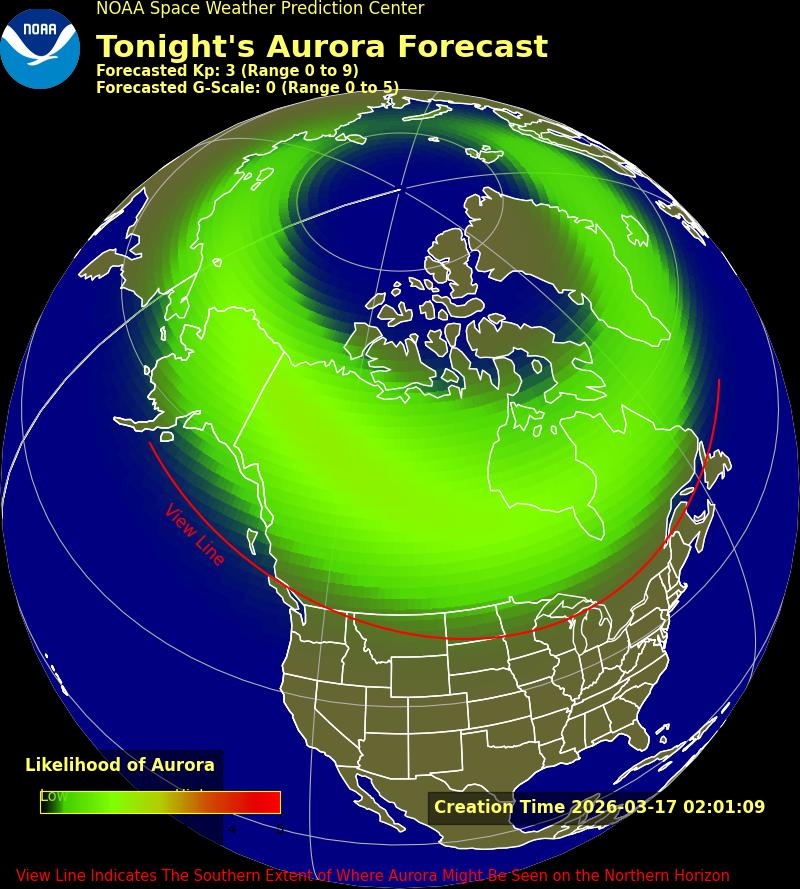
Predicting the aurora's appearance is a fascinating blend of space weather science and careful observation. For aspiring aurora chasers, understanding the forecast is paramount. Reputable sources like NOAA (National Oceanic and Atmospheric Administration) provide experimental Aurora Dashboards that offer predictions of the aurora's visibility for tonight and tomorrow night, alongside animations showing recent activity and estimates for the next 30 minutes. These tools are invaluable for planning your viewing experience.
The key to aurora forecasting lies in monitoring solar activity. Geomagnetic storms, caused by strong solar winds interacting with Earth's magnetic field, are the primary drivers of intense auroral displays. Scientists use various indices, most notably the Kp-index, to measure the intensity of these geomagnetic disturbances. The Kp-index ranges from 0 to 9, with higher numbers indicating stronger geomagnetic activity and, consequently, a greater chance of seeing the aurora further from the poles. A Kp of 0-2 suggests minimal activity, while a Kp of 5 or higher (a geomagnetic storm) could mean visible auroras extending to lower latitudes than usual.
Practical Tips for Chasing the Aurora
While a strong forecast is a great starting point, successful aurora hunting requires more than just knowing when the lights might appear. Here are some practical tips to maximize your chances:
*
Location, Location, Location: To truly appreciate the aurora, you need dark skies, free from light pollution. Get away from city lights! Head to rural areas, national parks, or remote viewing spots. The darker the sky, the more vivid the aurora will appear.
*
Check Local Weather: Clear skies are essential. Even with a strong aurora forecast, thick cloud cover will obscure your view. Always check the local weather forecast for your chosen viewing location.
*
Time it Right: The best viewing hours are typically between 10 PM and 2 AM local time, though they can appear any time during dark hours. The darkest months in the Northern Hemisphere are generally from late August to April.
*
Patience is a Virtue: The aurora can be unpredictable. You might need to wait for hours, or even multiple nights, for a good display. Bring a comfortable chair, warm clothing, snacks, and a hot drink.
*
Dress for Success: Even if the daytime temperature is mild, nights in high-latitude regions can be extremely cold. Layered clothing, insulated boots, hats, and gloves are non-negotiable.
*
Stay Informed with Apps and Websites: Many specialized apps and websites provide real-time Kp-index updates, cloud cover maps, and even push notifications for aurora alerts. These tools can be incredibly helpful in pinpointing the best time and place. For more advanced tracking and real-time data, be sure to consult resources that help you
Track the Aurora: Real-Time Northern Lights Visibility & Predictions. These often provide crucial data like solar wind speed, Bz component, and density, which are critical for predicting imminent aurora displays.
*
Look North (or South!): In the Northern Hemisphere, face north. In the Southern Hemisphere (for aurora australis), face south.
*
Allow Your Eyes to Adjust: Give your eyes at least 20-30 minutes to adapt to the darkness. Avoid looking at bright phone screens or flashlights during this time. A red-light headlamp can be useful for moving around without ruining your night vision.
Maximize Your Aurora Experience: Beyond Just Tonight's Forecast
While a single night's forecast is useful, true aurora enthusiasts often plan longer trips to increase their chances. Countries within the 'auroral oval'—a band around the magnetic poles where auroral activity is most concentrated—offer the best probabilities. Popular destinations include Iceland, Norway, Sweden, Finland, Canada, Alaska (USA), and parts of Russia. Planning a trip during the equinoxes (March and September) can sometimes offer slightly better chances due to how the Earth's magnetic field aligns with the solar wind.
For photographers, capturing the aurora is an art. A sturdy tripod, a wide-angle lens, and manual camera settings are essential. Long exposures (typically 5-20 seconds) at high ISOs (800-6400) and a wide aperture (f/2.8 or lower) will help you capture the vibrant colors and dynamic movement of the lights. Don't forget extra batteries, as cold weather can drain them quickly!
Understanding 'Aurora' in Other Contexts
The word "Aurora," derived from the Roman goddess of dawn, is a beautiful and evocative term, often used to describe light, new beginnings, or phenomena of celestial beauty. While our primary focus here is the breathtaking Northern Lights, it's worth noting that the name "Aurora" is also applied to other significant entities in the digital world.
For instance, the term "Aurora" also refers to
Aurora Store: Your Secure & Open Source Google Play Alternative. This open-source interface offers a free, simple, and secure way for users to access and download applications directly from the official Google Play Store. Unlike traditional app stores that own or license apps, Aurora Store acts more like a browser or a 'door,' allowing users to check app descriptions, screenshots, comments, and keep their apps updated directly from Google Play. It distinguishes itself by not collecting any user data, showing no ads, and not monetizing its users in any way, making it a popular choice for those seeking privacy and control over their app downloads outside of the conventional Google Play app on their device. Every app available in Google Play can be found through Aurora Store, though paid apps still require payment via Google Play itself. This distinction highlights how a single powerful name like "Aurora" can represent diverse and equally impactful concepts, from cosmic wonders to open-source software solutions.
In conclusion, chasing the aurora borealis is an unforgettable journey into the heart of nature's grandeur. By understanding the scientific forecast, preparing with practical tips, and embracing patience, you significantly boost your chances of witnessing the Northern Lights tonight or on your next adventure. Whether you're planning a dedicated trip to the auroral oval or simply hoping for a glimpse from your backyard during a strong geomagnetic storm, the magic of the aurora is a reminder of the universe's incredible beauty. Keep your eyes on the skies, and may your aurora dreams come true!